What Film Made Time Lapse Photography Popular Again in Main Street
In this article, I'll share the basics on how to film a timelapse video, no matter whether you're a beginner or an experienced lensman. Time lapses are a very popular type of cinematography in which the frequency of the captured frames is much slower than the final video play speed.
Along with its unique results, timelapse videography is also very user-friendly. Once you lot know the right techniques, yous tin make a time lapse with very bones tools similar a smartphone, an action camera, or, for even better results, with a mirrorless/DSLR camera.
Agreement Timelapse Videos
To sympathize meliorate this technique and to get a better idea of the whole procedure, let's offset by analyzing the bones structure of a moving-picture show, amend known as video.
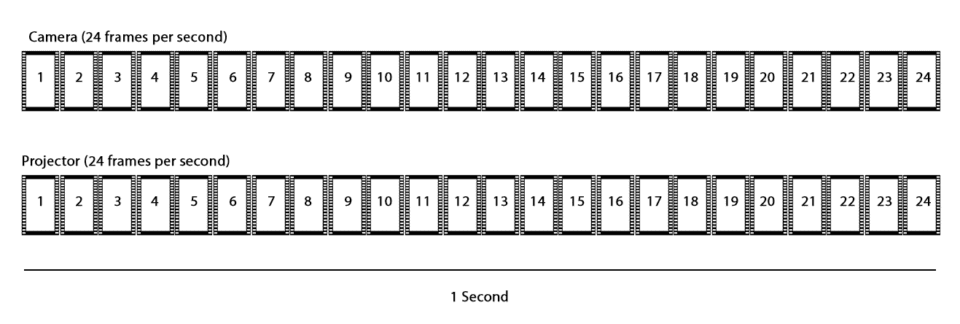
Every video you watch, from your smartphone to a film in the cinema, consists of individual frames captured and displayed at a specific frequency. The frequency of capturing and/or displaying those frames is called frame rate. It's usually measured in frames per second (FPS), with the about common frame rates being approximately 24, 25, thirty, 60, and 120 FPS.
In an ordinary video, the capture and display rates are the same. For example, you may picture show a video at 24 frames per 2d and and so play it back at 24 frames per second. This gives the illusion of motility in the final video prune. 24 FPS specifically is often referred to as "cinematic" and is used on movies, while 30 FPS is more mutual in home videos and Youtube clips. Many video games are displayed at 60 FPS and higher.
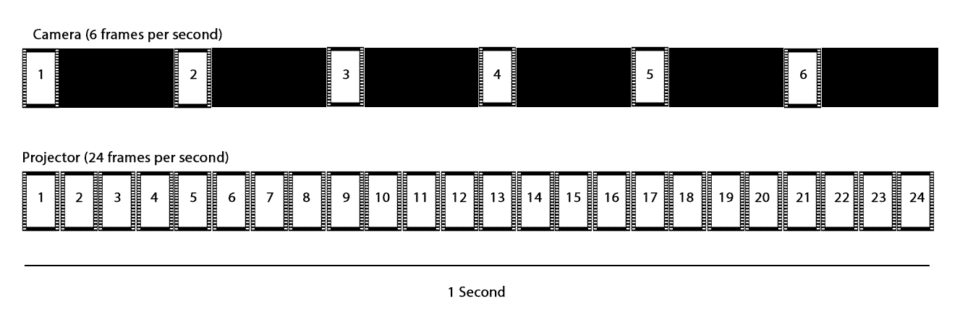
You tin can creatively control the appearance of move by capturing the frames at a dissimilar charge per unit than you play them back. For example, what happens if you capture the video at 120 frames per 2d, simply you maintain the playback rate of 24 frames per second? In that case, you've captured dull motion video. Specifically, if y'all had filmed for just one 2nd, you would stop up with 120 frames. Playing them back at 24 frames per 2nd would accept five seconds, slowing downward any motility in the video substantially.
Time lapse photography is the opposite of wearisome motion. In this case, you lot are capturing frames at a much slower rate than normal – maybe just one frame every few seconds or minutes. But since you're maintaining the playback rate of 24 FPS, y'all end up compressing all the movement and making it await sped upwardly. If it takes you an hour to capture 24 frames, and you lot play those frames back at 24 FPS, you lot'll have compressed an entire 60 minutes of movement into ane second of video.
You've probably seen timelapse videos before. They expect like this:
When you lot shoot timelapse photography, you need to know iii things:
- How fast you want the subjects in the video to exist moving
- How long you want the concluding video clip to be
- The frame rate of your playback
Once you know those three things, information technology'due south easy to figure out how many photos to take in the field – and how long to spend taking them – in society to make your fourth dimension lapse.
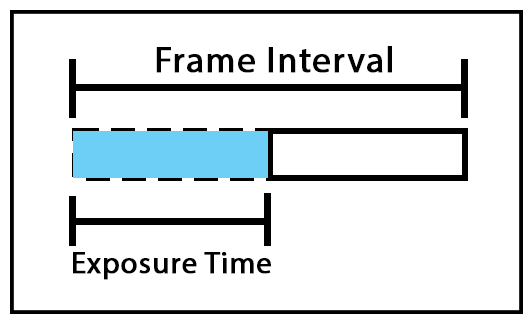
The starting time decision to make is to figure out yourinterval. Interval is the length of time between the first of each recorded frame. The longer your interval, the more time between exposures, and the more sped-up whatsoever movement will announced.
How to Cull Your Interval
Your chosen interval is how often the camera will kickoff a new exposure. For case, if you cull an interval of five seconds, the photographic camera volition begin a new exposure every five seconds.
This is fine in theory, but information technology can cause problems if your camera'southward exposure time (AKA shutter speed) is longer than your interval. For case, if your interval is five seconds merely your exposure time is six seconds, y'all volition end up skipping frames and could get a jittery timelapse.
It is also wise to calculate the buffer clearing speed before setting your interval. Many times, if a slower memory carte is beingness used, the camera volition take a moment to clear the buffer before information technology's fix to take another shot. This can also lead to skipped frames, especially if your interval is only a fraction of a 2nd longer than your exposure already.
To avoid any possible problems similar the above, a good rule of thumb is that you should add your exposure time plus your buffer clearing time together. You lot can feel comfortable using whatsoever interval that is longer than that sum.
After that, all you need to do is select an interval that makes the subjects in your video move at the speed you lot want. A long interval of several minutes will speed everything up dramatically, while a shorter interval of a couple seconds won't speed things up as much.
Beneath is a list of interval lengths that volition make common subjects look good in a standard 10-second timelapse video clip. These are simply guidelines, and if you lot desire a faster or slower timelapse, you tin can adapt from there.
- ane 2nd: Cars in motion, fast clouds, people walking. iv minutes of filming = ten seconds of 24 FPS video.
- 5 seconds: Sunrise/dusk, driving timelapse (inside a moving vehicle), dull clouds.20 minutes of filming = 10 seconds of 24 FPS video.
- 30 seconds: Changing weather, shadows moving, Milky way core.2 hours of filming = 10 seconds of 24 FPS video.
- Very long intervals: Growing plants, construction (buildings, ships, etc.), multi-24-hour interval timelapses.One or more days of filming = 10 seconds of 24 FPS video.
For instance, in the night heaven time-lapse sequence below, the final clip lasts 14 seconds. Within this short corporeality of time, you lot're watching a real event that lasted more than than two hours:
Other Time-Lapse Setting Calculations
At present that you have a basic understanding of how interval fourth dimension affects the end result, information technology's time to calculate how many shots are needed in full and the actual shooting time out in the field.
Let's take a very mutual and easy-to-shoot scenario as an case: a brilliant, blueish sky with some beautiful clouds moving across. Our goal is to create a x second time-lapse clip that will exist shown at 30 frames per second on YouTube.
- The easiest calculation is how many full frames yous demand to take. The respond is just how long you desire the terminal prune to exist, multiplied by the frame charge per unit y'all'll be showing the clip. In this example, ten seconds × thirty FPS = 300 frames.
- Then nosotros must decide how fast we want the clouds to be moving. Permit's say nosotros choose an interval of five seconds because nosotros want the clouds to move smoothly and non look rushed.
- Now that nosotros know the length of our desired clip (10 seconds), the playback frame rate (30 seconds), and the shooting interval (5 seconds), you tin summate the actual shooting fourth dimension by multiplying them.
- Here, the event of x × xxx × v seconds is 1500 seconds, AKA 25 minutes that it volition take to picture the time-lapse. That's calculated from the fundamental formula below:
Fundamental Formula
Final Video Elapsing × Playback FPS × Interval = Seconds Needed to Film
Of form, you lot can also use this formula in the other direction if y'all're trying to calculate how long the last clip will be, or how long of an interval to use. For case, if I know I want to compress ii hours (7200 seconds) of real-world movement into a twelve-second video clip at 24 FPS, I just need to plug those three values into the equation higher up, and I'll become the value for my interval.
In this case, plugging in the values gives me 12 × 24 × Interval = 7200 seconds. That simplifies to 288 × interval = 7200 seconds, which means my interval is just 7200 ÷ 288 or25 seconds.
So basically if yous know how to employ a calculator, y'all know how to make timelapses!
Basic Time Lapse Gear
Now that you know how to figure out the number and interval of photos to shoot, it's time to proceed with the required gear. There are but three things you'll need:
- A camera with a lens
- A tripod
- An intervalometer
1. Camera
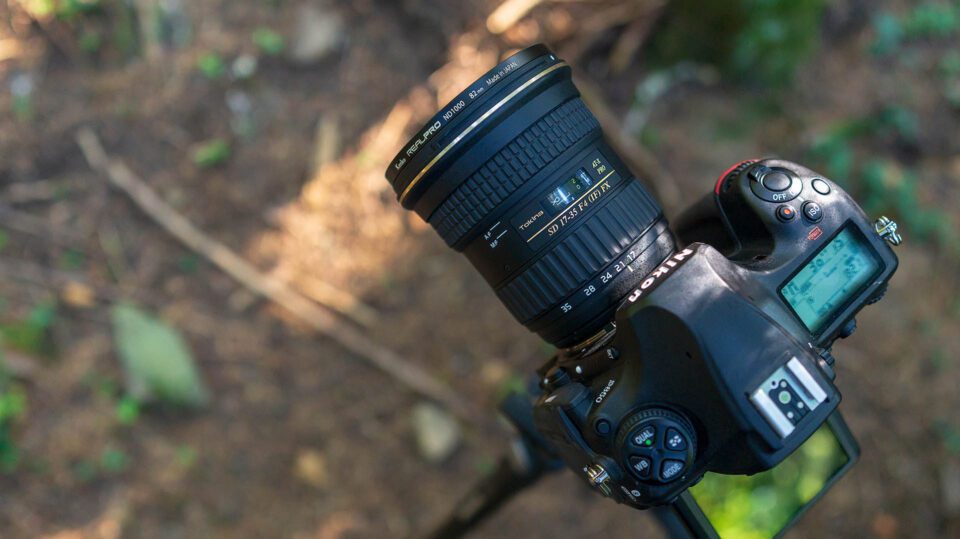
Although a simple time-lapse clip can be captured with a multifariousness of devices, from a smartphone to a basic action camera, I recommend using a DLSR or mirrorless camera for the great epitome quality they offer, non to mention the power to make transmission changes to the exposure settings.
Whatever digital photographic camera tin shoot timelapses, and near all cameras of the last 5 years take sensors with an epitome resolution of at to the lowest degree 24 megapixels. As such, information technology is very easy to create cute and detailed 4K timelapses. And if you have an even higher resolution sensor available, like a Nikon Z9, Z7 Ii, or D850, Catechism EOS R5, or Sony A7R IV, you can shoot 8k time-lapses. Higher resolution likewise leaves yous with more ability to crop in mail-production.
Annotation
Fourth dimension-lapse videos involve capturing a huge number of photos, which after some time will effect in a shutter failure. I recommend using the electronic shutter (sometimes just called silent shooting mode) if your photographic camera has this option, since information technology will assistance you avoid wearing out the mechanical shutter.
In terms of lenses, whatsoever lens can be used for time-lapse shooting (even a kit lens will do just fine), only depending on the subject or the shooting scenario, some will be better than others. If the timelapse is a archetype landscape view, a broad angle lens would be a practiced pick, while if the time-lapse is about distant lights turning on in the metropolis, a telephoto would be platonic. Information technology is all about the subject – and where you expect the bailiwick will get over the class of the timelapse. If y'all're shooting a timelapse of the sun or moon, make sure to picture with a wide enough lens that captures where the subjectwill be, not just where information technology is.
2. Tripod
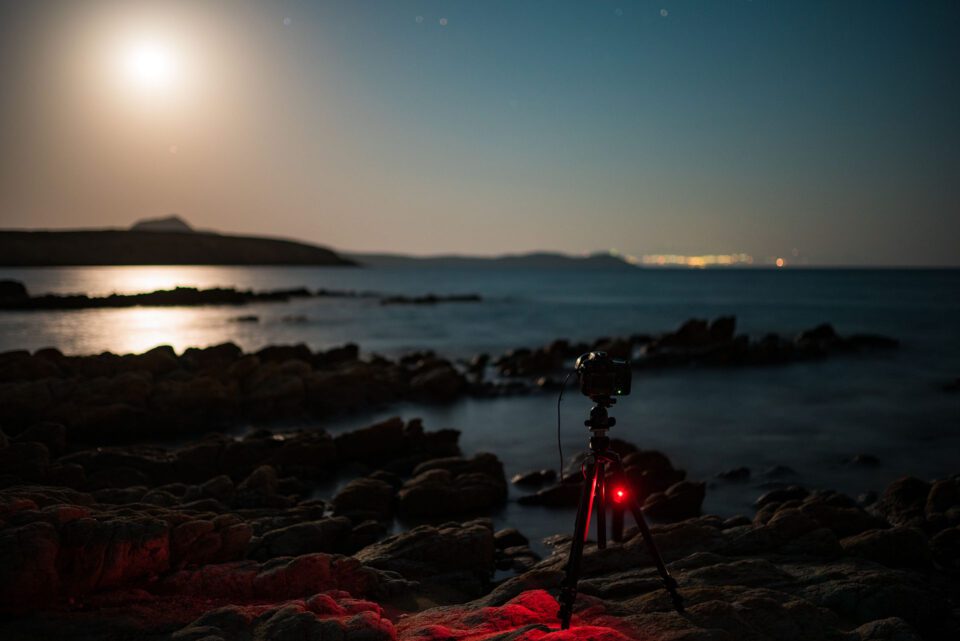
A tripod plays a very of import part in fourth dimension-lapse shooting. It must be very stable and sturdy, holding our gear in position and absorbing any possible micro movements. Otherwise, the timelapse video will have visible shake from frame to frame.
Alternatively, you can cull to apply a timelapse slider that moves the camera during the timelapse along a shine path. These can add a dynamic sense of movement to your video, although the downside is that smoothen and sturdy timelapse sliders ordinarily aren't inexpensive.
In whatever case, one of the worst results is to spend a lot of fourth dimension filming a long timelapse and only realize in mail service-production that the video is too shaky to utilize.
three. Intervalometer
Most cameras on the market accept a bones born intervalometer in their menus that can be used for time-lapse shooting. It may not have all the features you'd want for avant-garde timelapses, but it's a skilful manner to start experimenting. I primarily shoot with Nikon cameras, which take two options for a timelapse:
- Interval Timer Shooting
- Fourth dimension-lapse Picture
Both options are similar on the surface and follow the same principles. You lot must fix the interval and the required number of frames to be captured, and the camera will start capturing them. Yet, there is a big departure that will take a huge impact on the final result.
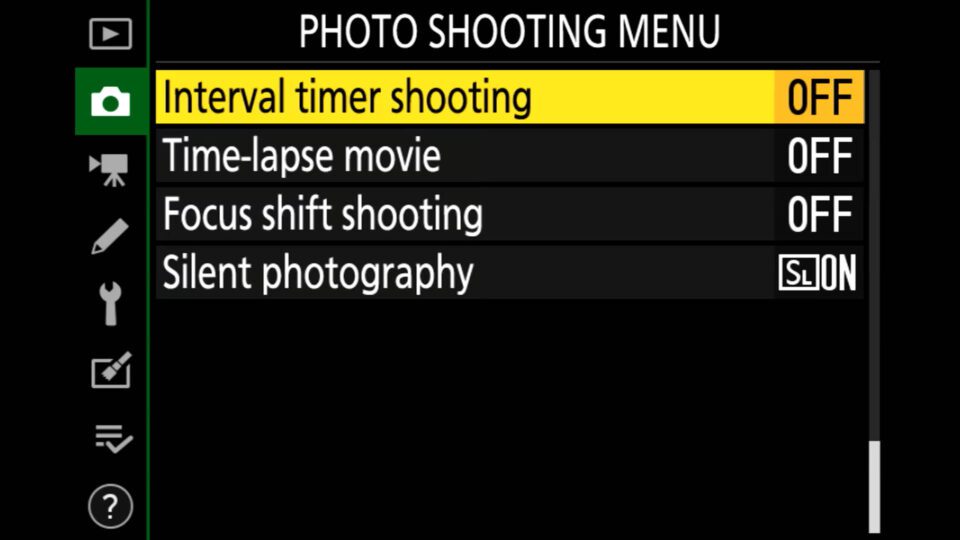
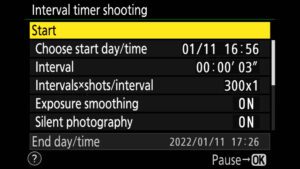
Interval Timer Shooting saves the photos (RAW, JPEG or RAW+JPEG) to your memory card. It gives you the ability to process your private shots later, no different from editing whatever other image. It's overnice to have this leeway, just it also means you need to utilize a separate editing/compiling software subsequently to turn the individual frames into a video clip.
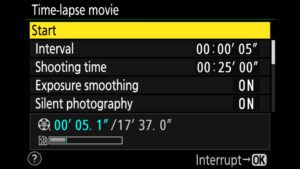
Time-Lapse Moving picture, on the other manus, direct creates a video filein-camera based on these shots. The individual photos are not stored; just the video file is saved. This can be handy in case of a uncomplicated and quick time-lapse clip, but it offers you less room to troubleshoot the timelapse afterward, and in more enervating scenes it is ideal to have RAW files to work with.
Ultimately, the departure boils down to whether you want the camera to build the timelapse or yous'd rather build it yourself. Aside from that, the two menu options take very like options:
Some cameras on the market, including the newer Nikon DSLRs and mirrorless cameras, do permit you to save both simultaneously. I consider this ideal, although it takes upwards a bit more retentivity card space.
Lastly, you lot as well have the choice to buy an external intervalometer if the menu options above aren't extensive enough to embrace your needs. There are many intervalometers available on the market today, with prices ranging from $10 to $400. They can connect to the camera either directly past cable or wirelessly.
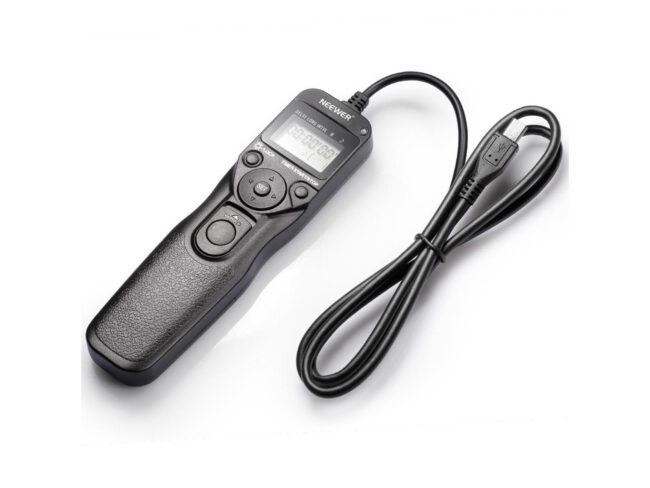
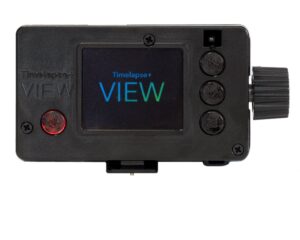
These minor programmable devices are used to set up the interval times and the number of frames, as well as the shutter speed of the camera in case of long exposure shooting.
Aside from this actress control, some other reward of external intervalometers is that they don't use as much photographic camera battery, then the shooting can terminal longer. You tin can also utilise changes while shooting in case it's needed, like for night-to-mean solar day timelapses that have proper exposure on both the Milky Way and the sunrise.
What to Capture
Time-lapse videos are most documenting the passage of time in a specific identify. So, it'due south all-time if some type of interesting motion is captured in the video, either of the subject itself or of its surroundings.
Some examples include:
- The Sunday as it rises and sets
- Clouds every bit they move in the sky during a windy day
- The Galaxy Milky way Core moving at night
- Car traffic at a road junction virtually your home
- A melting ice cube in your kitchen
The subjects tin can literally be unlimited. Merely let your imagination take over.
After you've filmed it, your work isn't quite done. You all the same need to edit the timelapse in video processing software. Later, I volition write more specifically virtually that topic to explicate some basic timelapse editing techniques.
Conclusion
Time-lapse photography is a very interesting technique, and if everything goes well, it will amaze you lot with the results. It might be a trivial challenging in the beginning, but hopefully the tips in this article give you a good place to start. Grooming and practice are key, so become out and endeavour some timelapses as soon as possible.
Let u.s.a. know if you've created any timelapses in the past or if you have any questions about timelapse photography in the comments below.
Source: https://photographylife.com/how-to-film-a-time-lapse-video
0 Response to "What Film Made Time Lapse Photography Popular Again in Main Street"
Post a Comment